Most teams try to ‘do AI SEO’ by publishing more content. That can work, but it is rarely the fastest route to AI visibility. The fastest route is often structural: make your site unambiguous.
Structured data and semantic HTML are the machine-language layer of modern discovery. They help AI systems interpret, trust, and reuse your content by making entities, relationships, authorship, and page intent explicit. If you want to be cited and summarized accurately, you need to become AI-readable—first.
AI systems do not browse like humans. They parse, extract, and map meaning. When your pages are ambiguous, the system must guess. When the system guesses, you lose narrative control.In the classic web era, structured data mainly powered rich results and clarified page elements for search engines.
In the AI era, it plays an expanded role: it reduces uncertainty for answer engines and assistants that want to attribute information safely.Semantic HTML is the complementary layer. If your page is a collection of divs with inconsistent headings, extraction becomes noisy. If your structure is clear—headings, sections, lists, tables, time tags—extraction becomes cheap.
And what is cheap to extract is easier to reuse.AI readability is therefore not ‘just technical SEO.’ It is a brand asset. It makes your claims and definitions easier to interpret, harder to distort, and more likely to be included in synthesized answers.
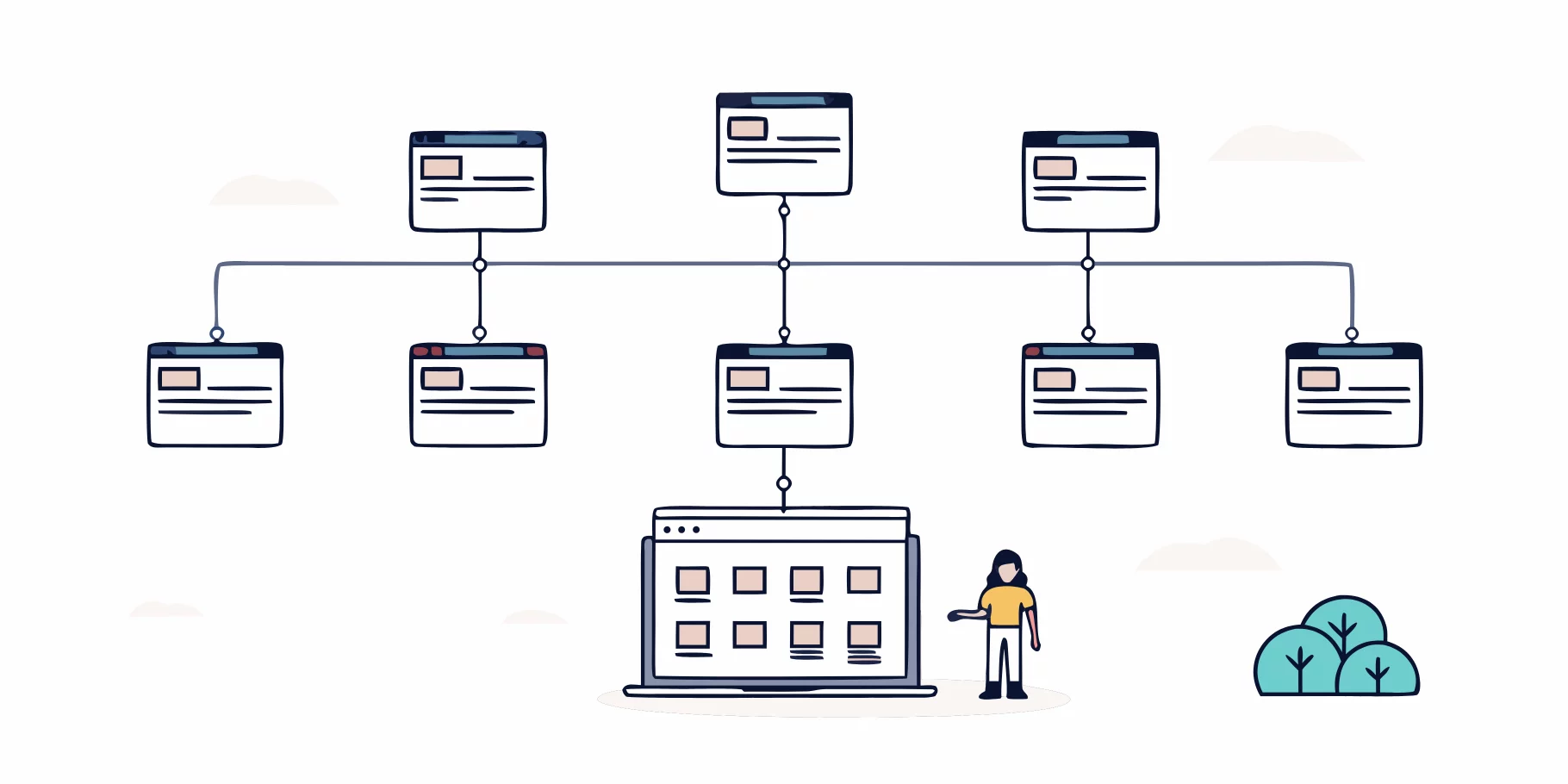
Think of AI readability as a stack. Layer 1 is semantic HTML. Layer 2 is structured data (Schema.org JSON-LD). Layer 3 is consistency across the site (your trust graph). If one layer is weak, the system’s confidence drops.Layer 1: semantic HTML. Use one clear H1, then H2/H3 that mirror user intent. Use lists for enumerations and steps. Use real tables for comparisons. Use
- Entity identity schema: Define who you are with Organization schema, sameAs links, founders (if appropriate), and contact points. This strengthens entity recognition and reduces ambiguity.
- Content-type schema: Use BlogPosting for posts, FAQPage for real Q&A clusters, and Product/SoftwareApplication for tool pages. These schemas clarify intent and improve machine comprehension.
- Semantic structure hygiene: Headings, lists, tables, and time tags make your content cheap to parse. Cheap to parse often becomes cheap to cite—especially for definition and comparison queries.
| Content-only approach | Semantics-first approach |
|---|---|
| Publish more pages and hope AI finds the right one | Make key pages unambiguous so AI extracts the right answer reliably |
| Risk of redundancy and generic ‘AI filler’ | Higher precision: entities, authors, and page types are explicit |
| Harder to audit what changed and why | Easier to audit and iterate because semantics are checkable signals |
“In AI search, semantics is leverage: it turns your website from readable to reusable.” Cosima Elena Vogel
You can upgrade AI readability without turning your site into an engineering project. Focus on the highest-impact elements first.
- Canonical naming. Decide the canonical names for your company, product, and key concepts. Use them consistently in headings, navigation, footers, and schema.
- Organization foundation. Implement Organization and WebSite schema with clean, accurate properties: name, url, logo, sameAs, and contact signals. This anchors your entity.
- Template-level content schema. For blog posts, implement BlogPosting schema (headline, description, author, publisher, datePublished, mainEntityOfPage). For product pages, use Product or SoftwareApplication. For Q&A, use FAQPage.
- Semantic HTML basics. Ensure a logical heading hierarchy. Replace vague link text with descriptive anchors. Use tables for comparisons and lists for steps. Mark dates with
- Validate and monitor. Schema should not contradict the page. Broken or misleading schema can erode trust. Implement a recurring audit cycle so schema and semantics don’t silently decay.GAISEO makes this operational: we detect missing or invalid structured data, inconsistent entity signals, and low-value implementations—then provide prioritized fixes so you ship improvements quickly.A practical way to sanity-check your shift is to audit one revenue-driving topic end-to-end: the blog post, the product page it links to, the FAQ that supports it, and the author credibility signals around it. If those pieces don’t reinforce one coherent message, your “system score” is weaker than your page score.Also plan for maintenance. AI-oriented visibility is sensitive to drift: product positioning changes, screenshots change, prices change, and old pages remain indexable. A monthly audit cycle—definitions, claims, internal links, and structured data validity—prevents silent decay.Finally, remember that AI SEO is a competitive game, not a solo one. If competitors publish clearer definitions, stronger criteria, and more trustworthy evidence, answer engines will naturally prefer them. The moat is consistency and clarity over time.A practical way to sanity-check your shift is to audit one revenue-driving topic end-to-end: the blog post, the product page it links to, the FAQ that supports it, and the author credibility signals around it. If those pieces don’t reinforce one coherent message, your “system score” is weaker than your page score.Also plan for maintenance. AI-oriented visibility is sensitive to drift: product positioning changes, screenshots change, prices change, and old pages remain indexable. A monthly audit cycle—definitions, claims, internal links, and structured data validity—prevents silent decay.Finally, remember that AI SEO is a competitive game, not a solo one. If competitors publish clearer definitions, stronger criteria, and more trustworthy evidence, answer engines will naturally prefer them. The moat is consistency and clarity over time.A practical way to sanity-check your shift is to audit one revenue-driving topic end-to-end: the blog post, the product page it links to, the FAQ that supports it, and the author credibility signals around it. If those pieces don’t reinforce one coherent message, your “system score” is weaker than your page score.Also plan for maintenance. AI-oriented visibility is sensitive to drift: product positioning changes, screenshots change, prices change, and old pages remain indexable. A monthly audit cycle—definitions, claims, internal links, and structured data validity—prevents silent decay.Finally, remember that AI SEO is a competitive game, not a solo one. If competitors publish clearer definitions, stronger criteria, and more trustworthy evidence, answer engines will naturally prefer them. The moat is consistency and clarity over time.A practical way to sanity-check your shift is to audit one revenue-driving topic end-to-end: the blog post, the product page it links to, the FAQ that supports it, and the author credibility signals around it. If those pieces don’t reinforce one coherent message, your “system score” is weaker than your page score.
If you want durable visibility in AI-shaped discovery, treat your website as a knowledge artifact: semantic HTML, structured data, and consistent identity signals. When those are in place, your content becomes not only readable, but reusable—and reusability is what answer engines reward.
GAISEO provides the infrastructure to dominate this new era.
Semantic HTML (like H1, lists, tables) structures the visible content for browsers and readers. Structured data (JSON-LD) is invisible code that explicitly tells machines what the content means (e.g., ‘this is a product’, ‘this is an author’).
Schema.org provides a standardized vocabulary that AI systems use to understand entities and relationships. It removes ambiguity, making it easier for AI to extract accurate facts and cite your content.
The most critical types are Organization (for brand identity), Article/BlogPosting (for content), FAQPage (for Q&A), and Product/SoftwareApplication (for offerings). Person schema for authors builds E-E-A-T.
Yes. Clear semantic structure (headings, lists, tables) helps search engines and AI models parse content more accurately. Content that is easy to parse is more likely to be indexed correctly and used in featured snippets or AI answers.
You can use Google’s Rich Results Test or the Schema Markup Validator. GAISEO also provides automated audits to check for missing, invalid, or inconsistent schema across your site.
AI can help write the code, but you need a strategy. Inconsistent schema (e.g., different organization names on different pages) can confuse AI systems. GAISEO ensures your schema strategy is coherent and valid.