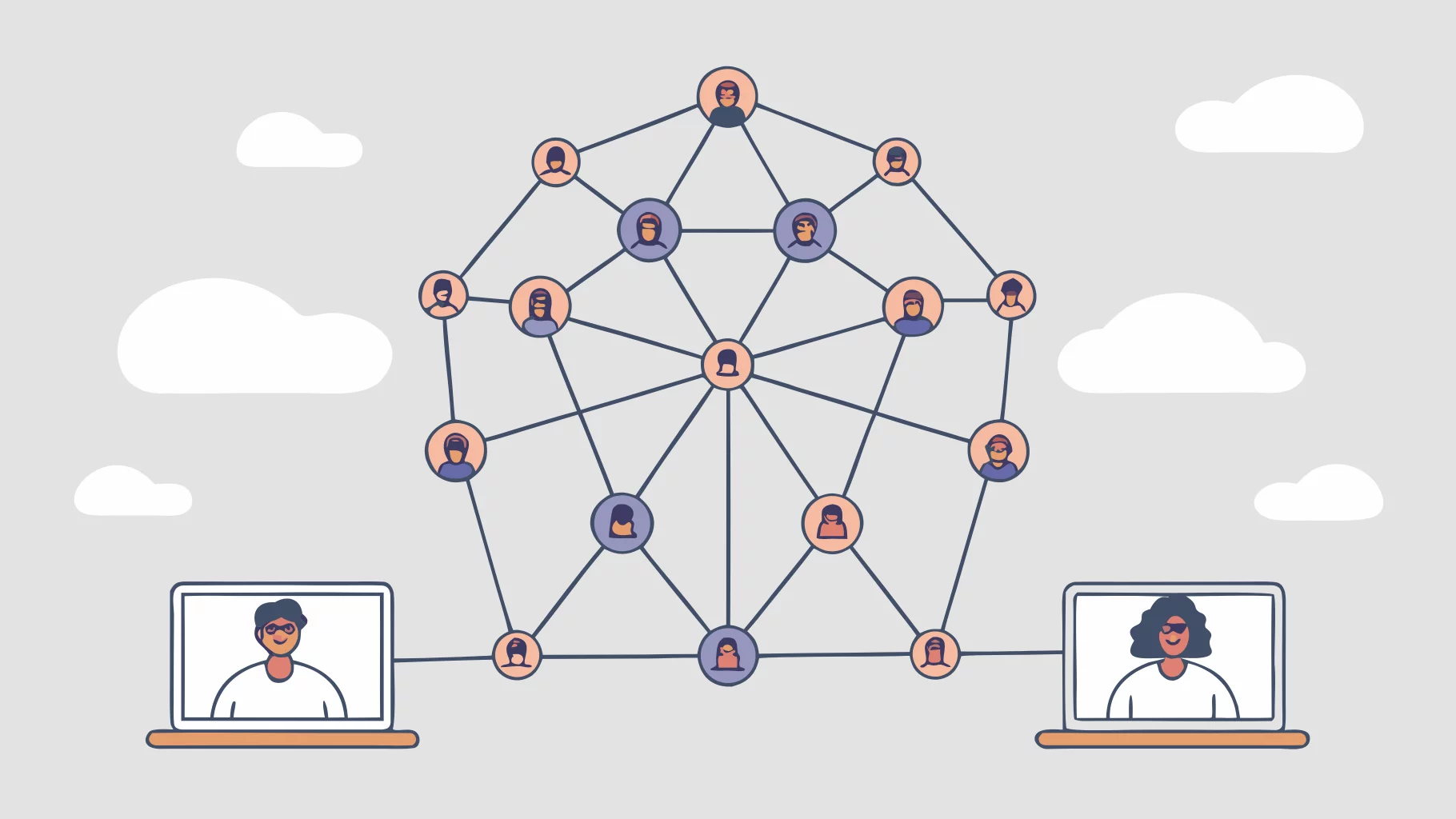
The era of keyword stuffing is over. For years, SEOs obsessed over how many times a specific phrase appeared on a page. Today, search engines and Large Language Models (LLMs) like ChatGPT operate on a fundamentally different level. They think in “Entities”—uniquely identifiable concepts like people, places, or ideas—rather than just strings of text.
Semantic relevance is now more critical than keyword density. To rank in 2026 and beyond, you must speak the language of the machine. GAISEO leverages Entity-Based SEO (EBS) to ensure your content doesn’t just contain keywords, but actively feeds the Knowledge Graph with clear, contextual relationships.
In the eyes of Google and LLMs, an entity is “a thing, not a string.” It is a concept that exists independently of the language used to describe it. For example, the entity “New York City” is understood as a location with attributes (population, location, landmarks) and relationships (part of USA, contains Brooklyn).
Google’s Knowledge Vault and modern LLMs use these entities to understand the relationships between data points. This allows them to perform “Disambiguation”—understanding that “Jaguar” in a car blog refers to the vehicle, while in a nature blog, it refers to the animal.
GAISEO goes beyond simple keywords to build “Topical Authority.” We ensure your content maps to the “Semantic Triples” (Subject -> Predicate -> Object) that machines use to store knowledge. This involves:
- Contextual Depth & Co-occurrence: Identifying and mapping relationships between entities within your content. If you write about “Coffee,” GAISEO ensures you also cover related entities like “Roasting,” “Beans,” and “Barista” to prove expertise.
- Structured Data (The ID Card): Using Schema Markup to explicitly tell LLMs which entities are present. This removes guesswork for the machine.
- Long-Tail Focus: Targeting specific queries that signal clear intent and entity relationships, rather than broad, ambiguous head terms.
| Old School (Keywords) | New School (Entities/GAISEO) |
|---|---|
| Focus on text strings (e.g., “best shoes”) | Focus on concepts & relationships (Brand, Material, Use Case) |
| Optimized for String-Matching | Optimized for Knowledge Graph & LLM Context |
| Vulnerable to algorithm changes | Future-proof against AI shifts (AEO) |
| Measured by Density (%) | Measured by Salience & Connectedness |
“We must move from optimizing for ‘strings’ to optimizing for ‘things.’ Entity Clarity is the key to being understood—and cited—by AI.”
Cosima Elena Vogel
Entity-Based SEO is essential for (AEO). When an AI generates an answer, it traverses its internal knowledge graph to find the most connected and authoritative entities. If your brand is not established as an entity linked to your industry topics, you are invisible.
GAISEO helps you identify the relevant entities and generates the Schema Markup to make them machine-readable. This “Technical Clarity” ensures that when an AI looks for an expert on a topic, your brand is the cited entity.
Stop counting keywords. Start building relationships between concepts. In the AI era, context is king, and entities are the kingdom. GAISEO is your semantic translator for this new age.
GAISEO provides the infrastructure to dominate this new era.
An entity is a distinct, identifiable concept—such as a person, place, organization, or idea—that search engines understand as a unique object with relationships to other objects, rather than just a string of text.
Keywords are ambiguous. ‘Apple’ can be a fruit or a tech giant. AI systems rely on entities to understand context and meaning (disambiguation), ensuring they provide accurate answers rather than just matching text strings.
The Knowledge Graph is a vast database of entities and the relationships between them. It allows Google to answer questions like ‘Who is the CEO of Tesla?’ directly, by understanding the connection between the entity ‘Elon Musk’ and ‘Tesla’.
Entity Clarity refers to how unambiguously your content defines a concept. Using structured data, clear definitions, and related semantic terms helps AI models identify exactly which entity you are discussing.
Use Schema Markup to explicitly define entities. Create content that covers related sub-topics (co-occurrence). Link to authoritative sources (like Wikipedia or Wikidata) to establish context.
GAISEO analyzes your content’s semantic depth. It identifies missing entities that competitors cover and generates the necessary Schema Markup to ensure your brand and content are correctly mapped in the Knowledge Graph.